 Mike O'Brien
Why Post‑Signature Contract Management Is Where the Real Risk – and ROI – Lives
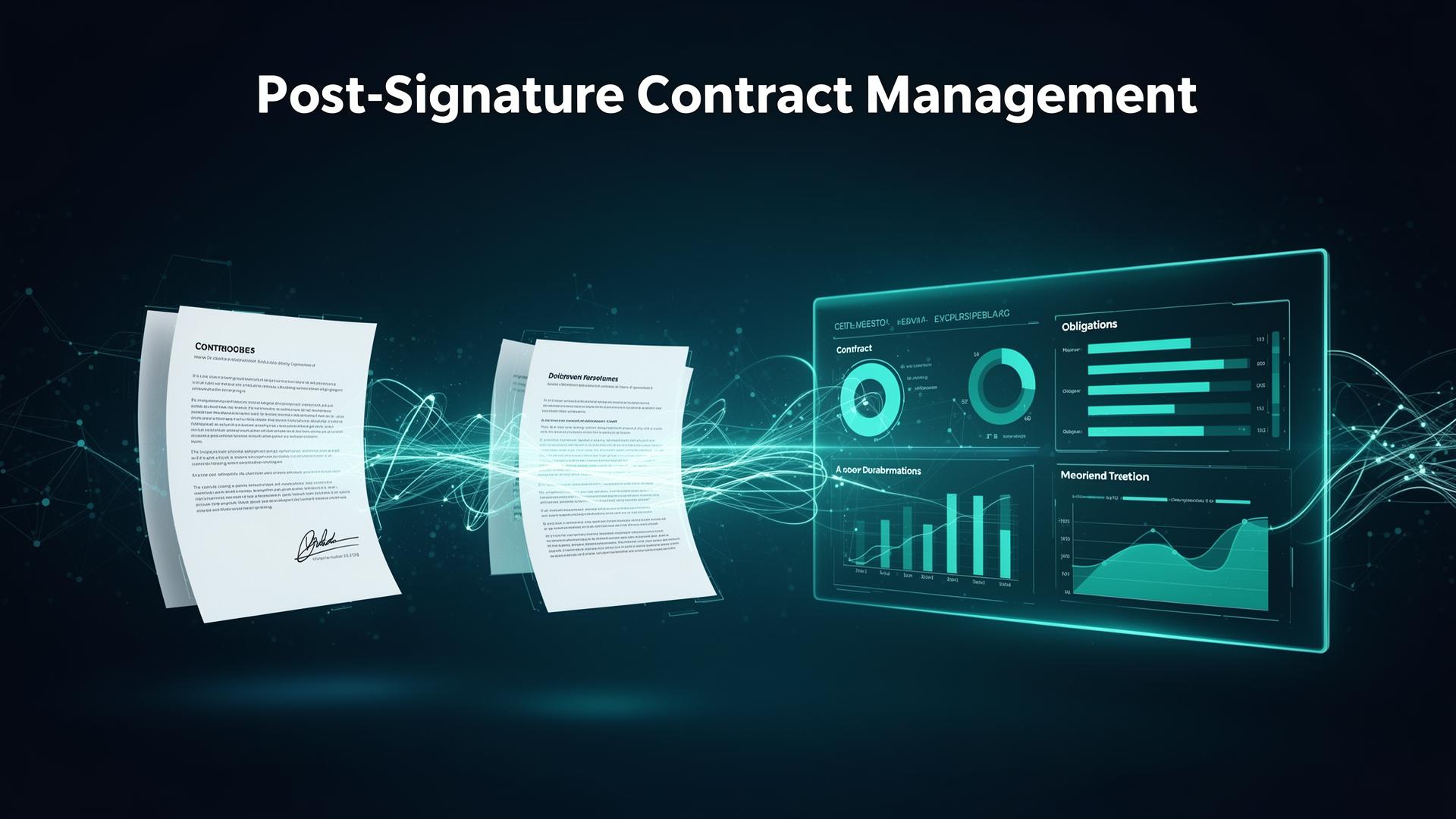
Most teams still treat "contract management" as everything that happens before signature: redlines, negotiations, and getting the deal over the line. But the reality is simple and uncomfortable: the majority of value leakage and risk shows up after the contract is signed.
Once ink is dry (or the e‑signature is done), the contract stops being a Word file and becomes an operational system: it drives obligations, service‑level commitments, pricing, renewals, and risk. If you aren't actively managing those things, you're leaving money on the table and inviting unpleasant surprises.
In this post, we'll break down what actually happens in the post‑signature phase, why traditional approaches break down, and how modern tools like ITKDocuments use AI to make obligation tracking and SLA monitoring finally workable in practice.
What is post‑signature contract management?
Post‑signature contract management is everything that happens after the contract has been signed by all parties. That includes:
- Tracking obligations and deliverables
- Monitoring SLAs and performance
- Managing renewals, expirations, and notice periods
- Keeping a reliable record of amendments and side letters
- Understanding risk and compliance exposure over time
In many organizations, this process is still manual:
- Signed PDFs are dropped into email, SharePoint, or a shared drive.
- Someone copies key data points into a spreadsheet.
- If you're lucky, there's a calendar reminder for a renewal date.
That might work for a handful of contracts. It doesn't work when you have dozens or hundreds of customers, vendors, and partners.
Where post‑signature contract management breaks down
When the post‑signature phase is managed ad hoc, the same problems appear over and over:
Missed obligations and SLAs
Nobody has a live view of "who owes what to whom, and by when." Deliverables slip, SLAs are breached, and credits or penalties aren't properly enforced.
Unwanted auto‑renewals
Critical contracts quietly roll over on unfavorable terms because no one saw the notice window in time.
Inconsistent, incomplete metadata
Different teams track different fields in different spreadsheets. There is no single source of truth for contract terms, risks, or renewal posture.
Hidden risk
You can't easily answer questions like "Which vendors have data‑processing obligations?" or "Which customers have most‑favored‑nation pricing?" without combing through PDFs by hand.
All of this creates what many teams experience as "contract chaos": you know the information is in your documents somewhere, but you can't reliably extract and act on it.
Why AI‑driven obligation extraction changes the game
The core problem isn't the contracts themselves; it's the data trapped inside them.
Historically, "obligation tracking" has meant either:
- Manually reading each contract and keying data into a spreadsheet, or
- Paying for a large CLM implementation that still requires significant manual configuration and data modeling before anything works.
Modern AI allows a different approach:
Automatically extract obligations, SLAs, and key terms
Instead of manually tagging clauses, an AI engine reads the agreement and identifies obligations, service‑level commitments, renewal terms, notice periods, and other key concepts.
Normalize those into structured data
Each obligation becomes a record: "Who is responsible? What is required? What is the deadline? What happens if it's missed?"
Monitor and alert in real time
Once obligations are structured, you can track them across all contracts in a single dashboard and receive alerts before something becomes a problem.
That's the layer most tools talk about, but in practice it's often still highly manual. The difference with ITKDocuments is how much of this pipeline is automated from the moment you upload contracts.
How ITKDocuments approaches post‑signature control
ITKDocuments was built specifically to solve the "after signature" problem.
When you upload a contract (or connect your existing storage), ITKDocuments:
Performs deep obligation extraction
It doesn't just grab a few dates and counterparty names. It identifies obligations, SLA requirements, renewal and notice terms, pricing mechanics, and other key operational clauses, then converts them into structured records.
Builds a live obligations and SLA dashboard
You get a consolidated view of obligations by contract, owner, due date, and status. You can see what's coming due, what's at risk, and where SLAs might be breached.
Runs risk analysis and summaries
The system flags risk‑relevant clauses and patterns (for example, unusual liability language or aggressive termination terms) and generates concise summaries so stakeholders don't need to read the entire contract just to understand the posture.
Keeps all post‑signature documents in one place
Amendments, SOWs, and side letters can be attached to the underlying agreement so you always see the full, current picture.
Works in minutes, not months
Instead of a year‑long CLM rollout, ITKDocuments is designed to go from zero to live post‑signature monitoring in about five minutes: upload, configure a few basics, and start seeing extracted obligations and SLAs right away.
The goal isn't to replace every CLM feature. It's to give legal, ops, and finance teams a lightweight but powerful control layer over what actually happens after signature.
What "good" looks like in post‑signature contract management
If you're wondering whether your organization is doing post‑signature management well today, ask:
- Can we quickly answer "What are our obligations under this contract, and who owns them internally?"
- Do we know which contracts auto‑renew in the next 30, 60, or 90 days and what our options are?
- Can we identify which customers or vendors pose the highest contractual risk without manually reviewing every document?
- When leadership asks about exposure on a specific issue (e.g., data processing, SLAs, pricing escalators), can we produce an accurate picture in hours, not weeks?
If the honest answer to most of these is "no" or "it depends on whose spreadsheet you ask," you're likely leaking value in the post‑signature phase.
Turning contracts into a post‑signature control system
Contracts are supposed to be a strategic asset, not a compliance chore. To get there, you need three things:
- Centralization – a single source of truth for executed contracts and related documents.
- Extraction – reliable, repeatable extraction of obligations, SLAs, metadata, and risks from those documents.
- Monitoring – dashboards and alerts that make it impossible to miss a critical date or obligation.
That's exactly the gap ITKDocuments is designed to fill: a fast‑to‑deploy, AI‑powered layer that turns static contracts into a live control system for obligations, SLAs, renewals, and risk—without the overhead of a heavy CLM implementation.
If your team is still managing the post‑signature phase in email threads and shared folders, it's probably time to take this part of the lifecycle seriously. The value – and the risk – lives there.