 Mike O'Brien
Why Contract Lifecycle Management Is the Backbone of Every Business Deal
Why Contract Lifecycle Management Is the Backbone of Every Business Deal
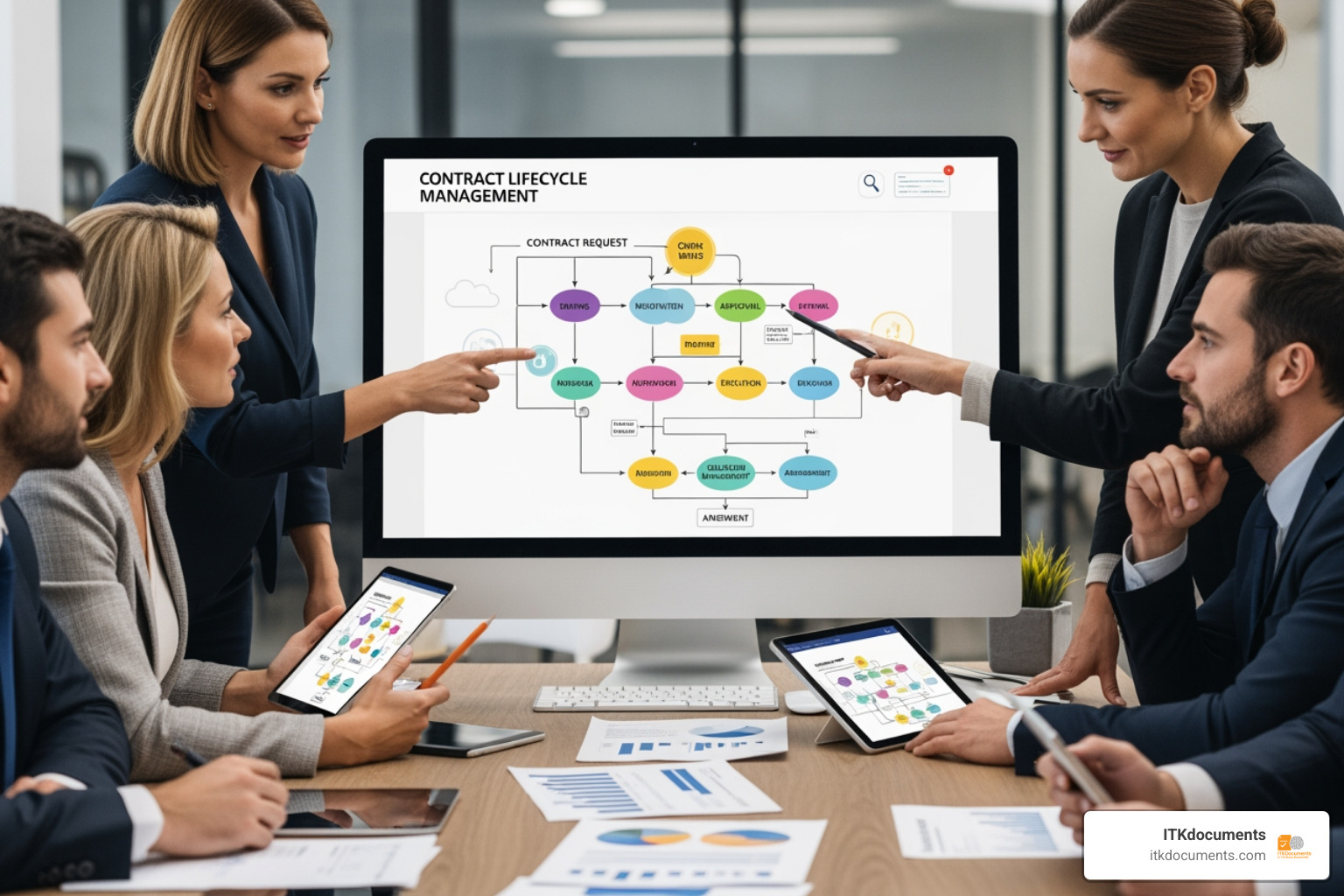
Contract Lifecycle Management is the end-to-end process of managing your organization's contracts — from the first request all the way through signing, execution, and renewal (or expiry). According to Wikipedia, contract management involves managing contracts made with customers, vendors, partners, or employees.
Quick answer: Here's what CLM covers at a glance:
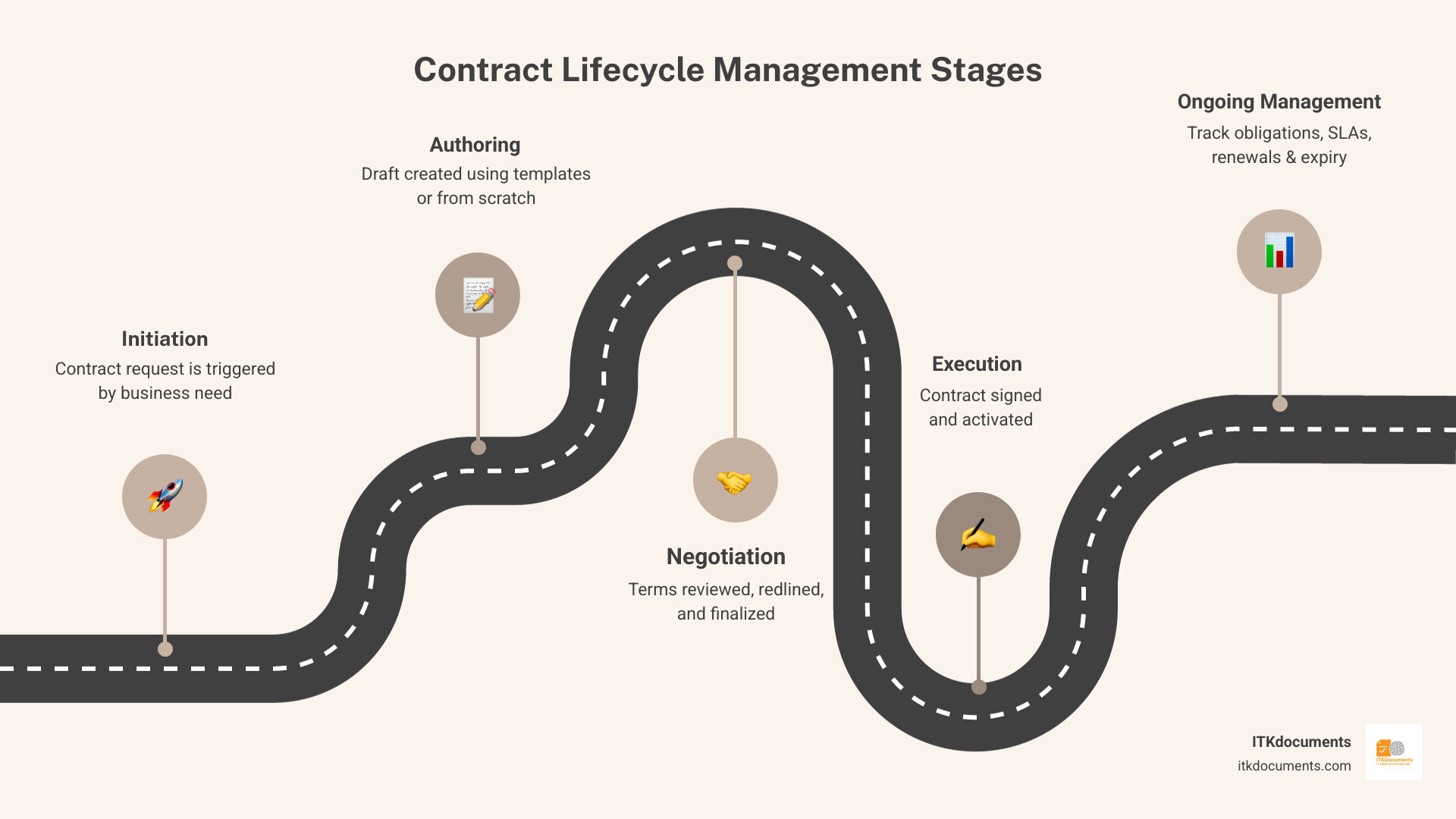
| Stage | What Happens |
|---|---|
| Initiation | A contract request is triggered |
| Authoring | Draft is created using templates or from scratch |
| Negotiation | Terms are reviewed, redlined, and agreed |
| Approval | Stakeholders sign off via defined workflows |
| Execution | Contract is signed and becomes active |
| Ongoing Management | Obligations, SLAs, and deadlines are tracked |
| Renewal / Expiry | Contract is renewed, renegotiated, or closed |
Up to 80% of B2B revenue is governed by contracts. Yet for many organizations, managing those contracts still means chasing emails, digging through shared drives, and hoping nothing falls through the cracks.
The result? Missed deadlines. Value leakage. Compliance failures. Deals that take weeks when they should take hours.
That's exactly the problem CLM software is built to solve — by centralizing contract data, automating key workflows, and giving every team full visibility into where each agreement stands.
I've seen this challenge up close. I'm Mike O'Brien, founder of ITKDocuments and former Chief Procurement Officer at Aviva, where I managed multibillion-dollar contract portfolios and saw how even large enterprises struggle to extract real value from their Contract Lifecycle Management processes. In the sections below, I'll walk you through everything you need to know — from the core stages to the AI tools reshaping how contracts get done.
What is Contract Lifecycle Management (CLM)?
At its core, Contract Lifecycle Management is about more than just filing papers. It is the proactive, strategic management of a contract from its very first spark of a request until it either expires or is renewed. Think of it as a digital nervous system for your business agreements.
For many years, contracts were treated as static "legal things" that lived in a filing cabinet or a dusty PDF folder. Today, we view contracts as dynamic business assets. Because nearly 80% of B2B revenue is governed by these documents, they are essentially the blueprints for your company's cash flow and risk profile.
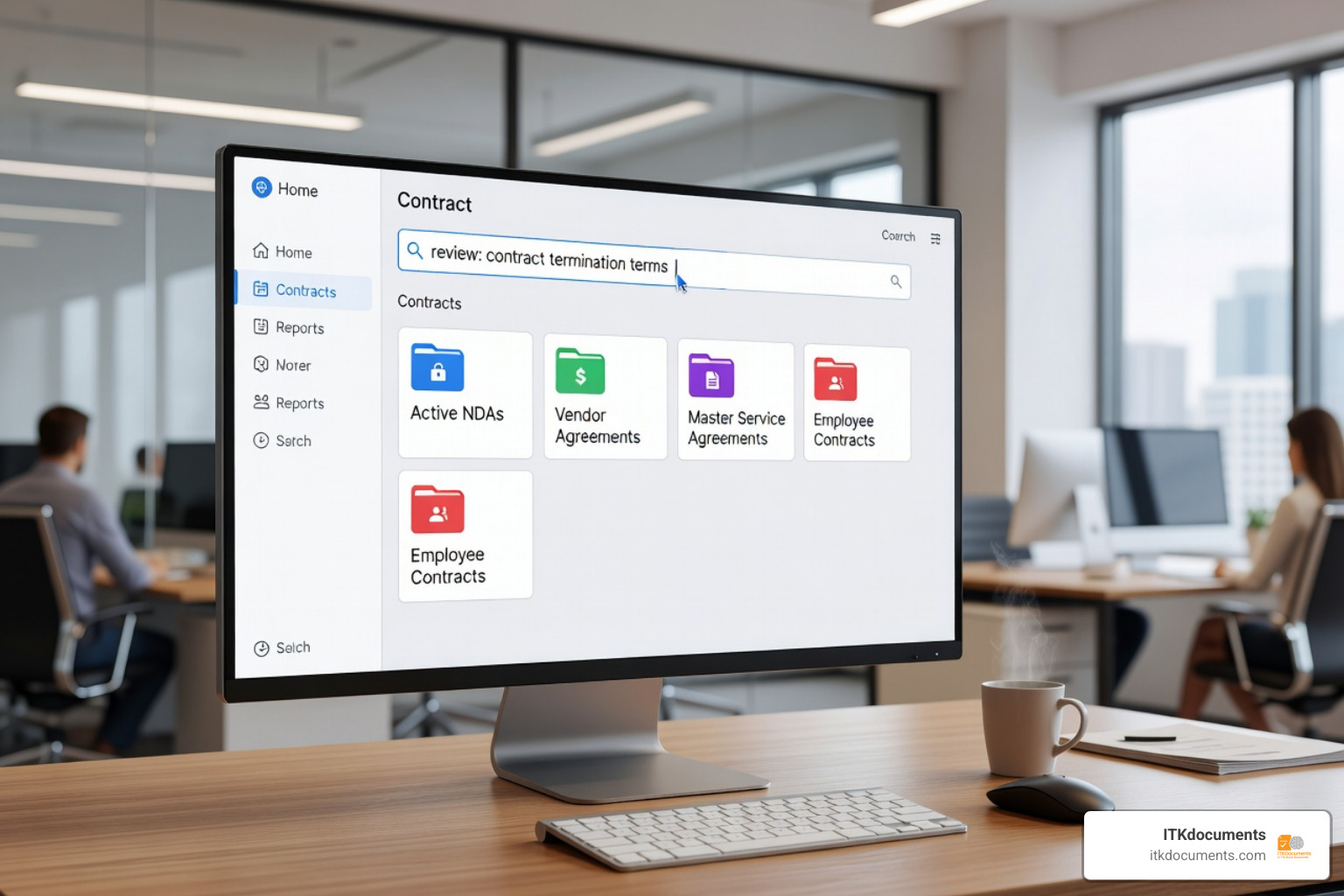
By centralizing storage in a single digital repository, we create a "single source of truth." This means your sales team isn't looking at an outdated version of a Master Service Agreement (MSA) while your legal team is reviewing a newer draft. CLM ensures that every stakeholder—from finance and procurement to legal and sales—is working from the same playbook.
Modern Contract Lifecycle Management focuses on three main pillars:
- Centralization: Keeping everything in one secure, searchable place.
- Compliance: Ensuring every contract follows company rules and legal regulations.
- Automation: Speeding up the "busy work" of drafting and signing so you can focus on the actual deal.
When done right, CLM moves from being a back-office administrative task to a competitive advantage. Imagine being able to query your entire contract portfolio to see how many of your vendors have specific liability clauses—all in a matter of seconds. That is the power of a mature CLM ecosystem.
The 7 Critical Stages of the Contract Lifecycle
To truly master Contract Lifecycle Management, we need to break it down into its component parts. While different experts might group these slightly differently, the industry generally recognizes seven key stages that a contract moves through.
- Initiation: This is the "request" phase. Someone in your organization realizes they need a contract—perhaps a sales rep closing a deal or a procurement manager onboarding a new supplier. In a manual world, this is an email; in a CLM world, it's a standardized intake form.
- Authoring: This is where the drafting happens. Instead of starting from a blank page (which is a recipe for errors), we use pre-approved templates. This ensures that the "fine print" is always compliant with our legal standards.
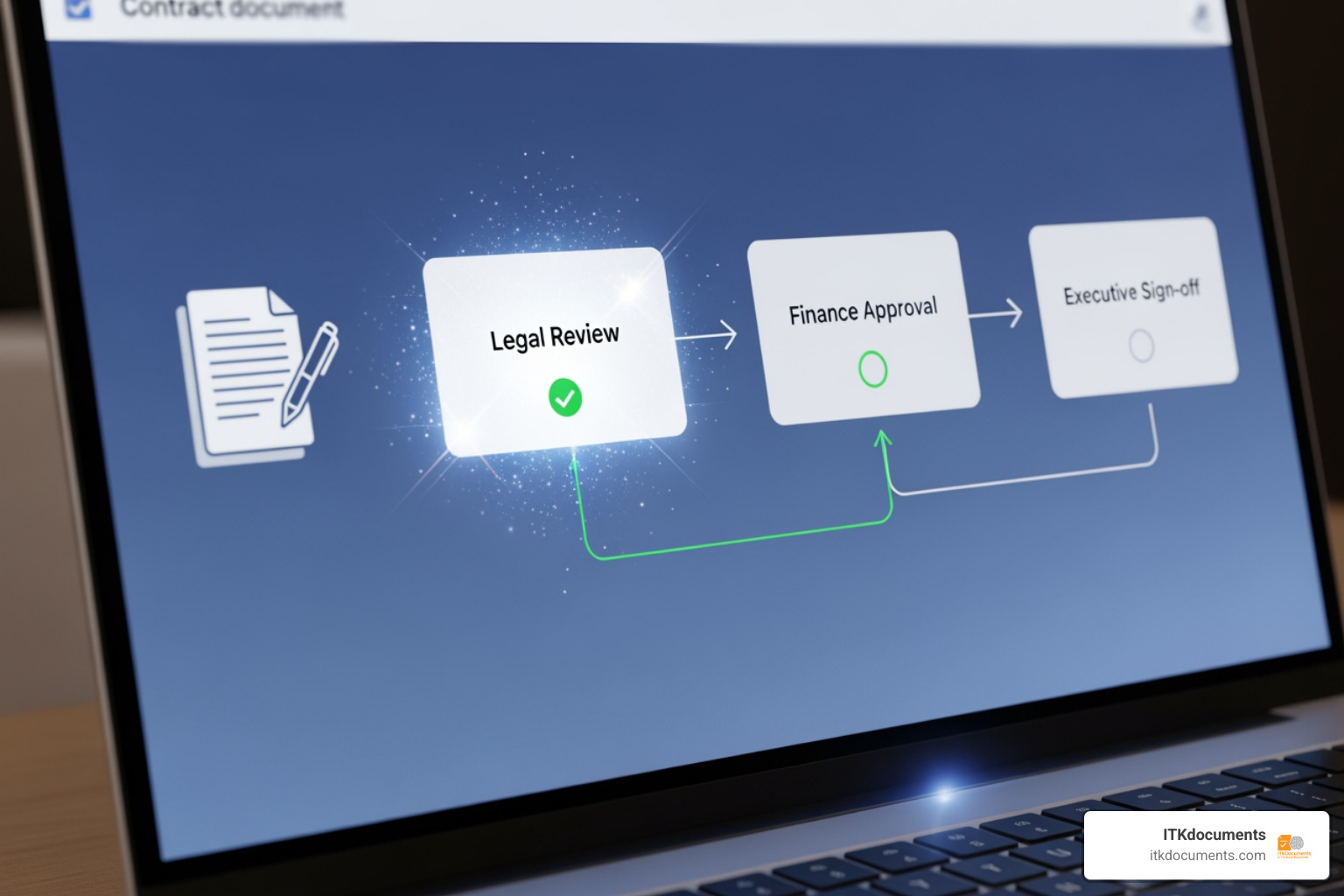
- Workflow & Approval: Once the draft is ready, it needs to be checked. CLM software automates this by routing the document to the right people (like the CFO or Head of Legal) in the right order. No more "Is this on your desk?" phone calls.
- Negotiation: This is the "redlining" phase. Parties go back and forth on terms. Modern systems allow this to happen within the platform, keeping a perfect record of who changed what and why.
- Execution: The finish line! This is where the contract is signed. By using e-signatures, we eliminate the need for printing, "wet ink" signatures, and overnight couriers.
- Ongoing Management: Many people think the job is done once the signature is dry. In reality, this is where the work begins. We must track obligations, Documentation, and Service Level Agreements (SLAs) to ensure we are getting what we paid for.
- Renewal or Expiry: As the contract nears its end, the system should alert you. Do you want to renew? Do you want to renegotiate? Having 90 days of lead time allows you to make a strategic decision rather than a panicked one.
Streamlining the Contract Lifecycle Management Workflow
Efficiency is the name of the game. If your Contract Lifecycle Management process is clunky, people will try to bypass it. To keep things moving, we focus on several key "accelerators":
- Standardized Templates: Research shows that organizations using standardized templates reduce drafting time significantly. We recommend building a library where 80% of your common contracts (like NDAs) can be generated without needing a fresh legal review every time.
- Clause Libraries: Sometimes a standard template doesn't fit perfectly. A clause library allows you to swap out specific sections (like "Indemnification" or "Payment Terms") with other pre-approved versions.
- Identifying Hidden Risks: Contracts often contain "ticking time bombs" like evergreen clauses that renew automatically without your knowledge. You can learn more about hidden contract risks to see what might be lurking in your files.
- Version Control: There is nothing more dangerous than signing "Version 3" when "Version 4" had the corrected pricing. Digital CLM ensures that the most recent version is always the one being acted upon.
- E-Signatures: Moving to digital signatures isn't just about saving paper; it's about speed. Some companies have reported reducing execution time from days to mere minutes.
The transition from paper-based systems to digital ones is perhaps the single biggest jump in productivity a legal or procurement team can make. You can read more about The Importance of Digital Contract Management on our blog.
How AI and Automation Transform the Industry
We are currently in the middle of a massive shift. The "old way" of CLM was basically a digital filing cabinet. The "new way" involves AI that actually understands what is written inside the documents.
| Feature | Manual/Legacy CLM | AI-Driven CLM (Modern) |
|---|---|---|
| Data Entry | Manual typing of dates and values | Automated extraction via OCR/AI |
| Risk Assessment | Human must read every word | AI flags high-risk clauses instantly |
| Search | Keyword-based (must match exactly) | Semantic/Natural Language search |
| Negotiation | Manual redlining and email trails | AI-powered playbooks and redline suggestions |
| Obligation Tracking | Spreadsheets and calendar alerts | Automated "Agents" monitoring performance |
Modern Contract Lifecycle Management now utilizes Large Language Models (LLMs) to parse complex legal jargon. This has led to the rise of "Agentic CLM"—where AI agents don't just wait for you to ask a question; they proactively look for issues. For example, an AI agent might notice that a new regulation has passed and automatically flag every contract in your system that needs to be updated.
Automated redlining is another game-changer. During negotiation, the AI can compare a third-party's draft against your company's "Gold Standard" playbook and suggest edits that bring the contract back into compliance. This doesn't replace lawyers, but it allows them to focus on the 5% of the contract that is actually controversial, rather than fixing typos or standard definitions.
The Role of AI in Modern Contract Lifecycle Management
AI isn't just a buzzword; it's a functional tool that addresses the "data gap" in most businesses. Most companies have thousands of contracts but very little "structured data" about them. AI bridges that gap through several key functions:
- Natural Language Querying: Instead of searching for "Section 4.2," you can simply ask the system, "Which of my vendors can I terminate with 30 days' notice?" This "Ask AI" functionality saves hours of manual research.
- Automated Data Extraction: When you upload a batch of 500 legacy contracts, AI can automatically pull out the effective dates, parties, and total contract values.
- Obligation Tracking: This is where the real ROI lives. AI can identify specific promises made in a contract—like "must provide a security report every 6 months"—and create a task for the responsible party.
- SLA Monitoring: For complex service contracts, AI can reconcile performance data against the contract terms to see if you are owed a service credit for downtime.
We regularly update our Blog with the latest trends in legal AI. If you're looking to implement these tools, our Services page outlines how we help businesses maximize efficiency with AI-driven CLM.
Key Benefits of Modern CLM Software
Why invest in Contract Lifecycle Management? The numbers speak for themselves. Beyond just making life easier for the legal team, CLM has a direct impact on the bottom line.
- Revenue Acceleration: By speeding up the approval and signature process, deals close faster. Some organizations report that best-in-class CLM can accelerate contract turnaround times by 83% or more.
- Preventing Value Leakage: It is estimated that nearly half of a contract's value can be lost due to missed deadlines or fumbled details. CLM ensures you actually collect the rebates and discounts you negotiated.
- Audit Trails and Compliance: In a regulated world, being able to prove who approved a change and when it was signed is vital. Digital CLM provides a perfect, unalterable audit trail.
- Cost Reduction: Automating the "intake-to-storage" workflow reduces administrative costs. For example, some organizations report that 80% of their standard templates no longer require manual legal review, freeing up expensive legal talent for higher-value work.
- Better Visibility: With interactive dashboards, leadership can see exactly where bottlenecks are occurring. Is the Sales VP sitting on contracts for too long? Is the Procurement team overloaded? The data will tell you.
For a deeper dive into how these benefits apply to your specific business model, check out our Services section.
Frequently Asked Questions about CLM
What is the difference between CLM and CMS?
While the terms are often used interchangeably, there is a distinct difference. A Contract Management System (CMS) typically focuses on the "storage" and "organization" of documents—think of it as a specialized Dropbox for legal. Contract Lifecycle Management (CLM), however, covers the entire journey, including the drafting, negotiation, and post-signature performance tracking. CMS is about the document; CLM is about the process.
How does CLM improve regulatory compliance?
CLM software acts as a guardrail. By using pre-approved templates and clauses, you ensure that every contract starts off compliant. Automated workflows ensure the right stakeholders (like Compliance Officers) are looped in for high-risk deals. Finally, the centralized repository makes responding to audits a matter of minutes rather than weeks of searching through filing cabinets.
Which industries benefit most from CLM solutions?
While every business with contracts benefits, certain industries see massive ROI:
- Healthcare: Managing patient consent, provider agreements, and strict HIPAA compliance.
- Manufacturing: Managing complex global supply chains and vendor obligations.
- SaaS/Tech: Handling high volumes of EULAs, SLAs, and subscription renewals.
- Energy: Tracking regulatory compliance and high-value asset agreements.
Conclusion
Contract Lifecycle Management is no longer a luxury for the Fortune 500; it is a necessity for any business that wants to grow without being buried in paperwork. By treating your contracts as data-rich assets rather than static documents, you unlock hidden revenue, mitigate risks, and empower your teams to move at the speed of modern business.
At ITKdocuments, we believe that powerful contract tools should be accessible. Our platform offers a 5-minute setup to value, allowing you to upload your documents and receive instant AI risk assessments and obligation extraction. Whether you are looking to track SLAs or simply get your contracts out of "email purgatory," we are here to help.
Ready to see the difference for yourself? You can review our Terms, reach out to Support with any questions, or Start your free trial with ITKdocuments today to take control of your contract lifecycle.